The story behind the song – “Two Nights in Toledo”

“Two Nights in Toledo” is the fourth track on my latest album, Hired Gun. I’ve been delighted to see it getting a bit of play—though I haven’t spotted it turning up in Toledo itself yet. In this post, I want to share a bit about how the song came together, and why it’s a good example of what I enjoy most about songwriting.

So, what comes to mind when you think of Toledo? Toledo, Ohio, that is—not the one in Spain. Before writing this song, I honestly didn’t know much about the city, apart from the fact that in the fall of 2014 I was scheduled for a short work trip to the University of Toledo.

If you’d asked me back then what I knew about the place, my first reference would have been the character Max Klinger (played by Jamie Farr) from the long-running TV series M*A*S*H. Many of you will remember him as the cross-dressing corporal who tried every trick to get out of the army and back home to Toledo. I might also have mentioned the minor-league baseball team, the Mud Hens, mostly because I recall Klinger wearing their jersey in a few episodes. Beyond that, Toledo was a blank space for me.

Leading up to that work trip, I remember coming up with the title “Two nights in Toledo” during a late-night songwriting session. It felt promising, and I started riffing on it. Shortly after came the phrase “could make you a different man.” Now I had a complete line—but no idea where it was heading.

A lot of my songwriting begins this way: something small catches my attention, but without a clear sense of the story behind it. The challenge is to tease out the possibilities—to find a narrative or at least a set of images that might support a lyric. One of the tools I use at this point is the internet. Not as a shortcut, but as a way to gather raw material. Facts, places, details—anything that might help an idea take shape.

So I started reading.

I learned that the Maumee River, which runs through Toledo, had once been a major Indigenous trade route and later became part of the Great Lakes shipping system during the industrial era. Toledo grew into an important port for grain, coal, and iron ore moving through the region. I didn’t know any of this, and I wasn’t sure how it might fit into a song, but the detail stuck with me. Sure enough, the river ended up finding its way into the lyric later on.

Then I found myself reading about the country hit “Lucille”—written by Hal Bynum and recorded by Kenny Rogers in 1977. The opening line—“In a bar in Toledo, across from the depot…”—is the connection. Everyone remembers the hook, “You picked a fine time to leave me, Lucille,” but that Toledo reference anchors the song in a very particular way. I give a nod to it in my own lyrics—if you listen, you’ll hear it.

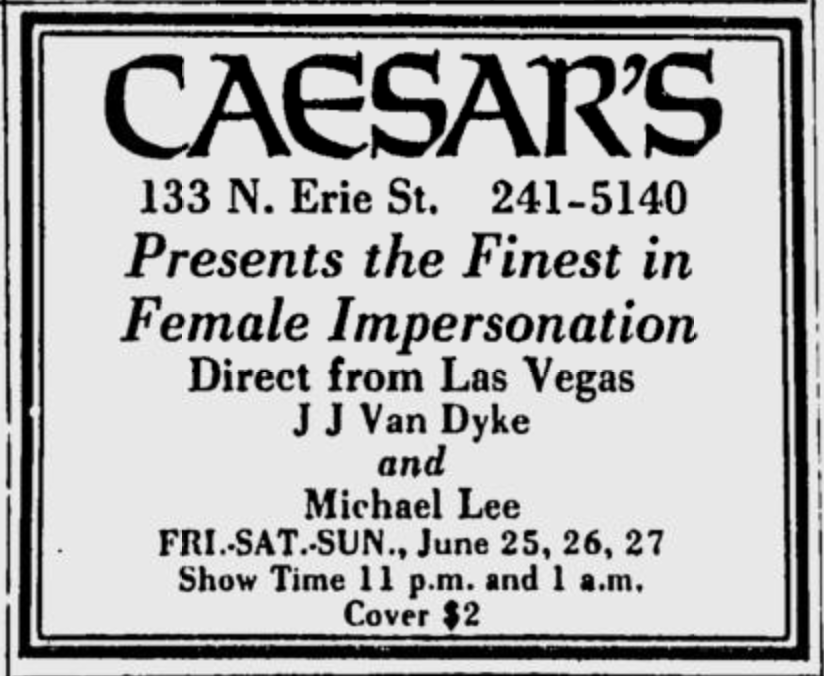
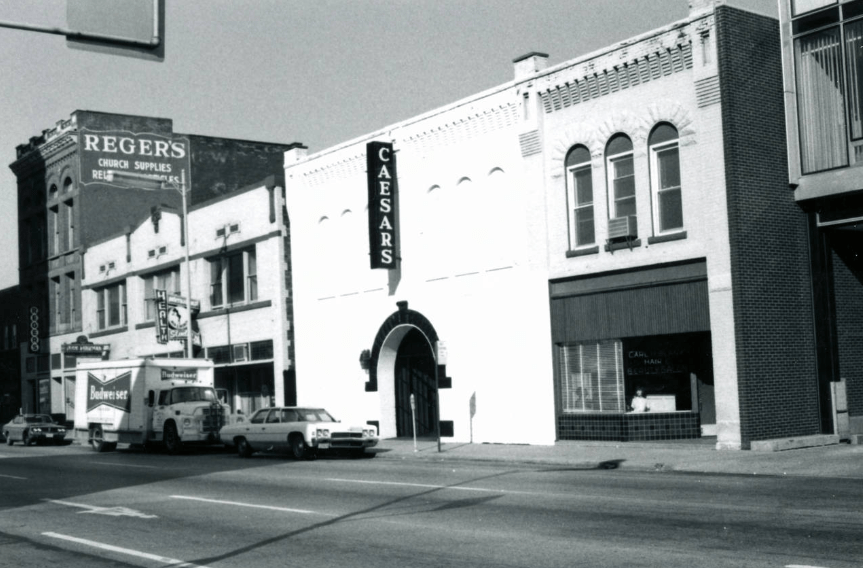
But the real turning point came when I stumbled on a website that mentioned Caesar’s Show Bar. It was a ’70s nightclub run by Joseph C. Wicks, complete with a lighted dance floor, ambitious staging, and a reputation for featuring female impersonators—a distinctive fixture of Toledo’s nightlife at the time.

It’s long gone now, but something about it clicked immediately. Suddenly the line “could make you a different man” had an angle—an unexpected twist, to be sure, but now there was a through-line for the song.
Once that happened, the song pretty much wrote itself. That’s usually how it works for me. You follow the idea wherever it leads. You stay open to surprises. You let your muse be the guide.

The version on Hired Gun is different from the original demo, but I like how it has turned out. It’s got a little of that old school Bryan Adams energy to it, which I don’t mind at all, being a long time fan.

The story behind the writing of “Two Nights in Toledo” is a great illustration of how I work. I might start with almost nothing, a fragment of a lyric usually, but if I stay curious, keep digging, and trust the process, the song usually tells me what it wants to be.

Tacoma ER22C SJ by brett jordan

Preproduction session 5: get back (to where you once belonged)

Tracking will start on the record in January but the last preproduction session of 2015 was about continuing to run songs and exploring ideas for arrangements.

One important point that came out of the conversation was about capturing the essential energy of a song, and how that energy changes as a song evolves from a seed into a demo and beyond.  Sometimes the seed of the song captured on a smartphone or a scratch track has a liveliness to it that slowly disappears as it is massaged into a more complete piece and arrangement.

As a result there are times when it may be helpful to scrap the demo version and go at a song fresh in order to re-energize it and bring back the sparkle of that first blush of an idea.

Philosophers and anthropologists talk about liminality, that moment of first encounter with something new and unknown.  It’s a notion that captures the idea of a threshold, of disorientation, of radical potential.  The liminal energy of a new song is vital, and trying to bring it out in a record is a priority if the track is to come alive for the listener.

Studio LaRoi empty_Dec. 20_2015

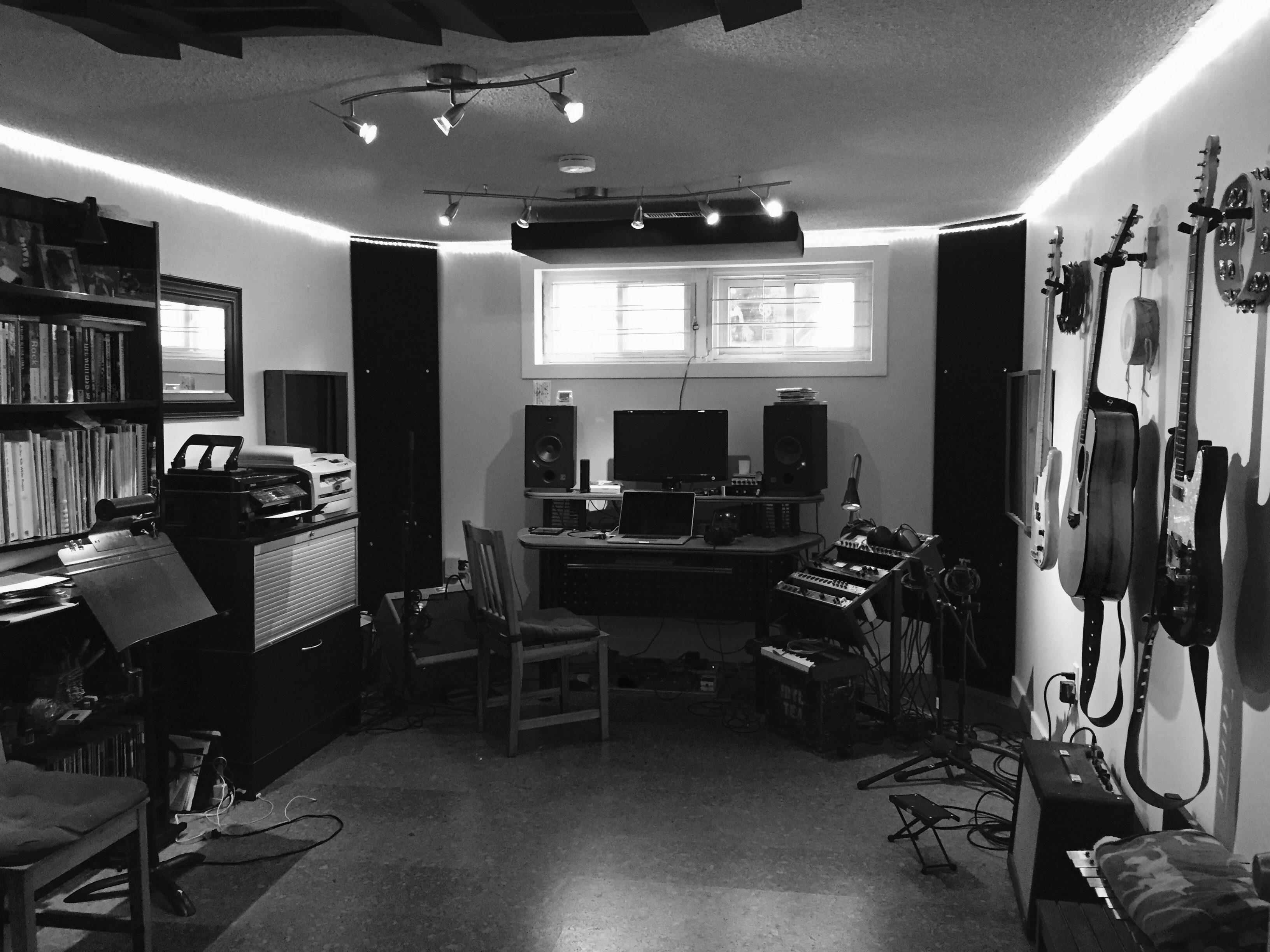
Everett LaRoi’s home studio where we will be recording in January

One of the tracks planned for the record, “Meet me in Montreal” has been indelibly etched in my mind with an arrangement I cobbled together for the first demo of it.

Everett and I had an important conversation about that song yesterday, discussing the idea of departing from that demo version and taking it in a brand new direction from a production standpoint.

And while the demo version is familiar and has some good ideas in it, I’m totally okay with trying something new as a way to recover that liminal energy and inject into it some outside creative influences.  I realize that it’s not quite a tabula rasa but it is more about returning to that original place of inspiration … or getting back to where I once belonged.


Getting the record together: budget time

Now that I’m contemplating a self-released album or EP, I need to think about the inevitable costs.  Like any other project it’s important to think through the details because, well, that is where Devil lives.  In those details.  To help me work through this process, I’ve drawn on a great resource online for artists looking to release their own record.  Among other things, there is a link to a resource on creating a budget.

Categorically, the costs divide up into (1) music production and recording; (2) artwork and packaging; (3) marketing and promotion; and (4) “other” expenses, which include online distribution. I’ll start to work my way through these and share some of the details in upcoming posts, including any additional resources I might come across.

https://www.flickr.com/photos/39747297@N05/5230479916/in/photolist-8Yczsd-cbcCk3-7jNmHv-dipm3P-5FefTX-sKjX3-5Fixk1-bBUjs2-bCwEoZ-4qLmk2-ccHti1-bUswQr-2Nati-eALvw3-5bjaoE-dULRxt-boZz85-daMjCh-5FivxU-nfWQif-bEU9xB-evy1D8-78WDg-3f6kZz-bQ7zsp-5FefXP-ddus1V-dwHLRn-5FiwF3-3Ao8mS-9NCMZT-5EYCfm-cpXBxm-e48NRC-8h9176-bBUupB-jvie5t-jjWWL7-2BS8QV-2pvf6Z-4ZHLs3-5WnYcr-422k5w-63dWbv-fbyEfd-oJsYJa-bxN9YA-fSNt1b-dURTpS-3AEivQ

Tracking your digital song files with the ISRC

I’ve embarked on a learning journey as I begin preparations for making a record.  Among the things I’m learning is the ISRC (International Standard Recording Code) is the system for royalty collection with digital song files.  The ISRC is a 12-character identifier associated with each unique song, that allows it to be traced back to the owner for royalty payments.

The code consists of a 2-digit country code, registrant code, year of reference, and designation code.  For Selkirk Range the code for the first song on the record will probably look like this:  CAX0V1600001, where “X0V” is my registrant code and identifies me as the independent artist that owns the rights to the song.  “CA” is Canada, and “16” is the year I expect to release the song (2016).  The designation code 00001 might be the first song on the record.

The owner assigns the codes to the songs and includes them with the metadata of the files as well as the master CD.  The owner also provides them to agencies that need them for tracking and paying royalties (e.g., iTunes, CD Baby, etc.).

There is no cost for obtaining an ISRC Registrant Code and it’s quick and painless. As an independent artist you will likely have to do this yourself.  Each country has its own domestic organization that administers the ISCR, and in Canada it is Connect Music Licensing.  You can learn more about Canadian ISRC administration here.

More on simplicity and songwriting

The Glenn Morrison/Islove song “Goodbye” is a current example of success through simplicity.  It contains a strong melodic hook with a compelling visual image as the centrepiece: “…and it starts to snow in the streets of Mexico.”

It’s one of those lines that I can imagine a songwriter just blurting out as they play through the chord progression and then realizing they are on to something interesting.  The winning element here is that Morrison didn’t bury that line in complexity but chose to showcase it with a catchy and infinitely repeatable melody.

The song itself is a common chord progression (Am/F/G/Am) with only the addition of the C (Am/F/C/G) to create contrast between the opening verse and the lead up into the chorus.

From a production standpoint, however, there is quite a bit going in this song.  I suppose that’s the caveat to Gary Ewer’s comments about simplicity and success.  Dressing a song up for contemporary hit radio is perhaps the producer’s art form.  The right tempo, the right drum track, the sound textures (including Morrison’s use of a sample from “Every Breath You Take”), the perfect vocal performance, etc.

Simplicity is one thing.  Making the most of the song for the intended audience, especially contemporary hit radio, can be a very complicated and delicate undertaking indeed.

https://www.flickr.com/photos/39747297@N05/5230479916/in/photolist-8Yczsd-cbcCk3-7jNmHv-dipm3P-5FefTX-sKjX3-5Fixk1-bBUjs2-bCwEoZ-4qLmk2-ccHti1-bUswQr-2Nati-eALvw3-5bjaoE-dULRxt-boZz85-daMjCh-5FivxU-nfWQif-bEU9xB-evy1D8-78WDg-3f6kZz-bQ7zsp-5FefXP-ddus1V-dwHLRn-5FiwF3-3Ao8mS-9NCMZT-5EYCfm-cpXBxm-e48NRC-8h9176-bBUupB-jvie5t-jjWWL7-2BS8QV-2pvf6Z-4ZHLs3-5WnYcr-422k5w-63dWbv-fbyEfd-oJsYJa-bxN9YA-fSNt1b-dURTpS-3AEivQ

Is it time to make a record?

Slowly but surely I’m starting to take steps toward making a record.  As an independent artist it is a significant investment of time and energy but my aim is to think about it as a creative act while approaching it with a business-like frame of mind.  A platinum selling record isn’t the goal obviously, but a decent return on the investment through modest but steady record sales supported by a smart might be within reach.

Most important, however, is to approach this as a learning opportunity that brings together the creative and business sides of the music industry as it is today (i.e., complicated!), and to use this initiative as a way to connect to other people and make it a rich social experience that contains its own rewards.

Taking that lead, I’ve started doing my homework to figure out the “unknown unknowns” as it were.  Cameron Mizell’s four-part series “Introduction to the Self-released Album” on Musicianwages.com has been a great starting point to gain some awareness of the various things involved in this process.  It’s recommended reading for anyone taking this route as an independent.