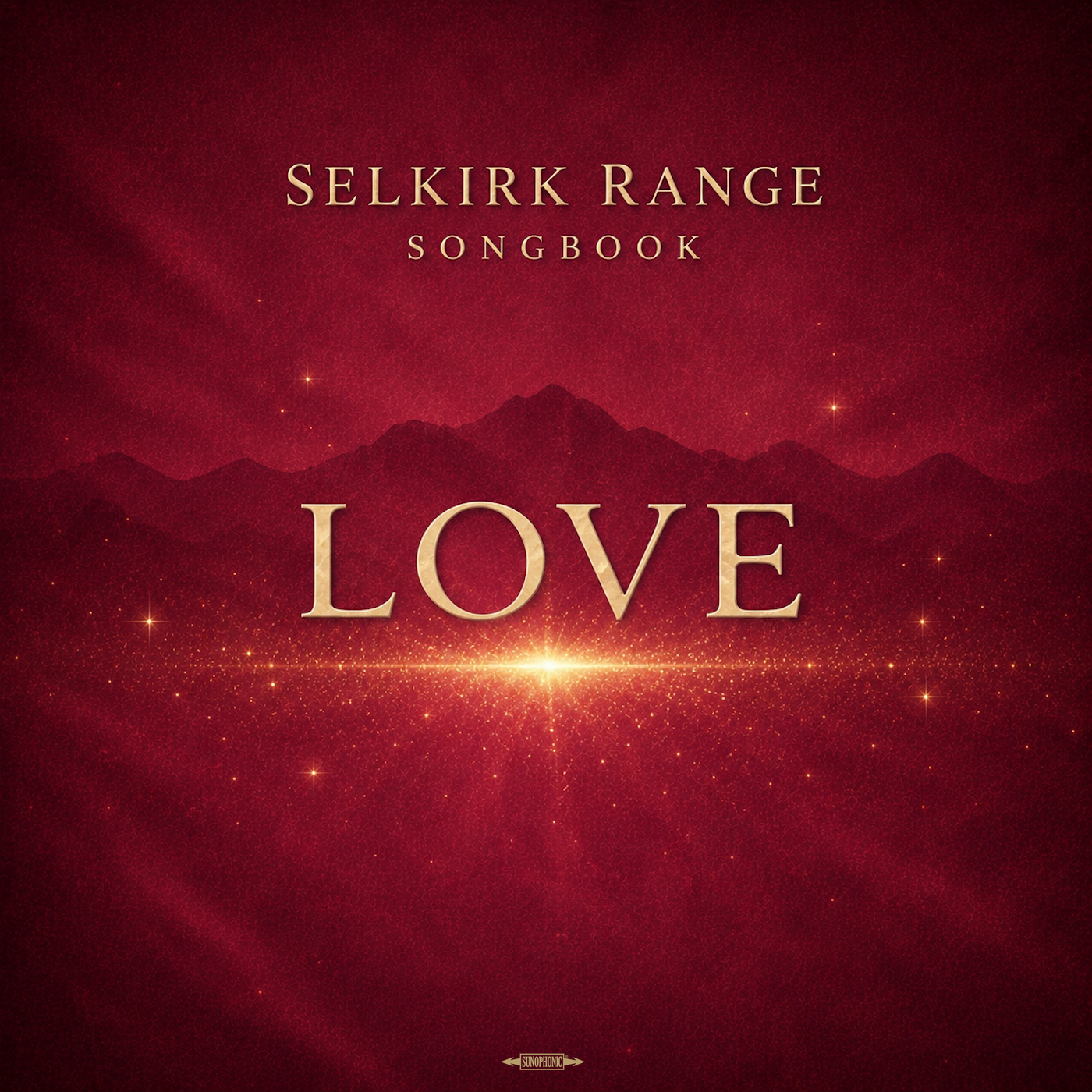
Now that Love is out, I thought I’d say a little more about how the record was made.
The album is part of an ongoing experiment I’ve been calling the Sunophonic Sessions: using generative music tools as part of the process of realizing songs I’ve written.
There are plenty of different ways people are now using generative AI to make music. My own process on this album was quite specific.
For many of the tracks, the starting point was an existing home demo.
Usually that meant me performing the song with an acoustic guitar and other instruments: the lyrics, melody, chord structure, rhythm, phrasing and basic musical idea already there, captured in recordings and more polished home demos.
I then used those recordings as the source material for developing fuller performances.
In some cases, the resulting versions stay remarkably close to the original demo. In others, the arrangement moved in a substantially different direction.
The process involved a lot of fine tuning and very selective choices about which versions best fit the overall sound and vision for the album.
I would generate performances, listen carefully, reject them, try something different, return to an earlier direction, adjust the approach, and continue until I found something that felt right.
The closest analogy I can think of is a term like “musical direction”.
As the songwriter, I knew the song and had a reasonably clear sense of what I wanted it to become. The work was in recognizing which performance captured that and which did not, both individually and together as a collection.
Not every performance was successful. Not every detail in the finished versions is exactly what I would have done if I had complete control over every note. But that is not unlike working with musicians either. Performance always involves interpretation.
What matters most to me is whether the resulting recording brings the song to life in a way that I feel is true to my intent as the songwriter. And, let me be clear: I wrote all these songs on the album. Every lyric on every song. And most of the musical phrasing, with a few exceptions where I felt Suno offered a more exciting or more musically interesting interpretation of a song that I might otherwise have abandoned.
And that has been the most surprising part of this experiment.
My primary interest has always been songwriting rather than proving that I personally played every instrument or sang every note on a finished recording.
Would it be wonderful to take 18 songs into a great studio with exceptional singers, session players, producers and engineers? Absolutely.
It would also cost many thousands, and probably tens of thousands, of dollars.
Independent musicians have always worked within the resources available to them. Home recording, drum machines, digital audio workstations, virtual instruments and inexpensive production software all changed what could be done outside a professional studio.
Generative tools represent another change in that history.
It is now possible for a songwriter to take a home demo and use these tools to explore performances and arrangements that previously might have remained inaccessible.
Over the next little while, I’m going to make that process more transparent by sharing some of the original demos behind Love alongside the finished recordings.
Then you can hear the difference for yourself.
Love is now available on all streaming platforms including Spotify and Apple Music.